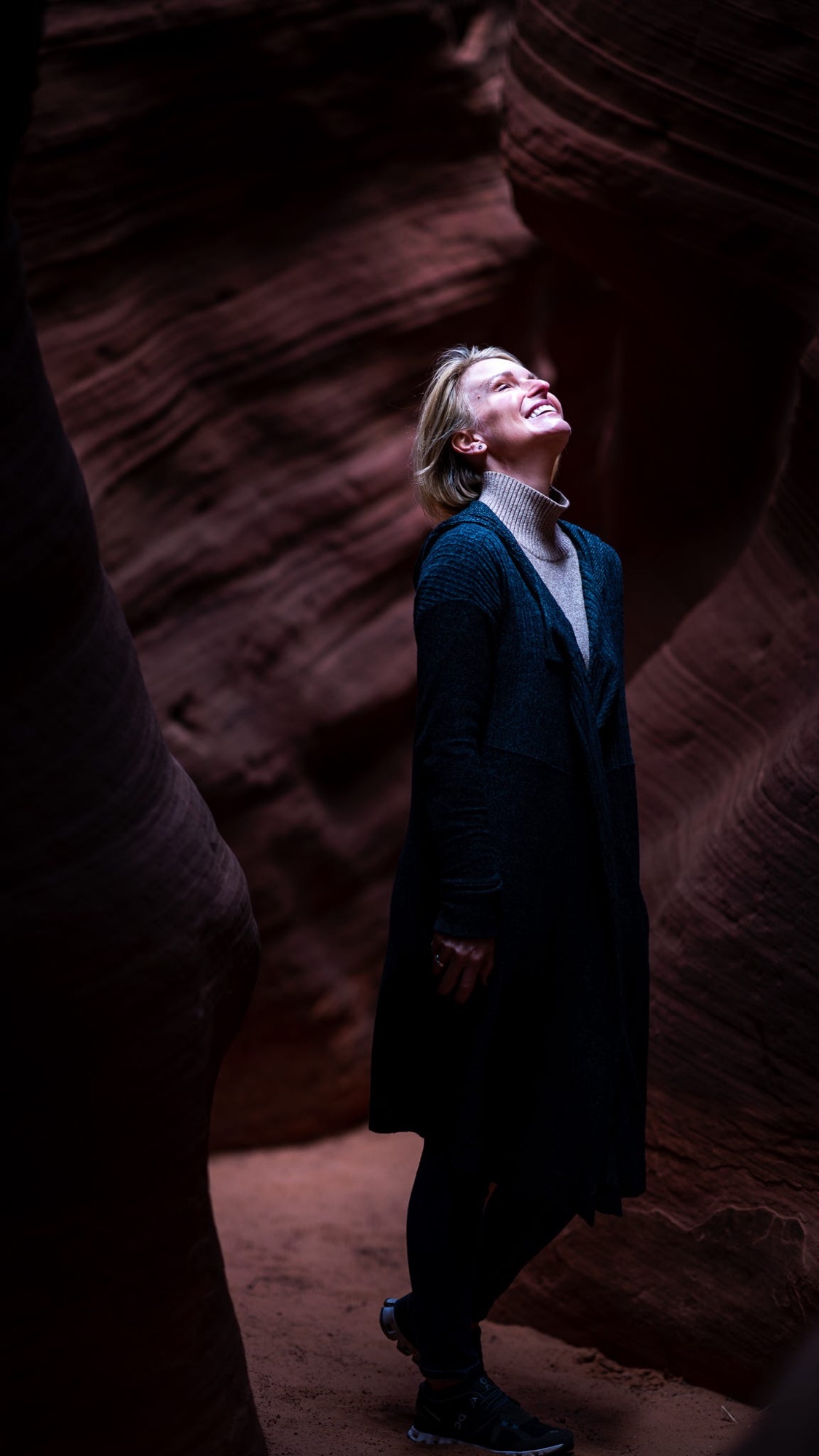
The Navajo are stewards of a special place. A sacred place. A place filled with history, moments, and life. It is a place to find peace and connect with people and their history.
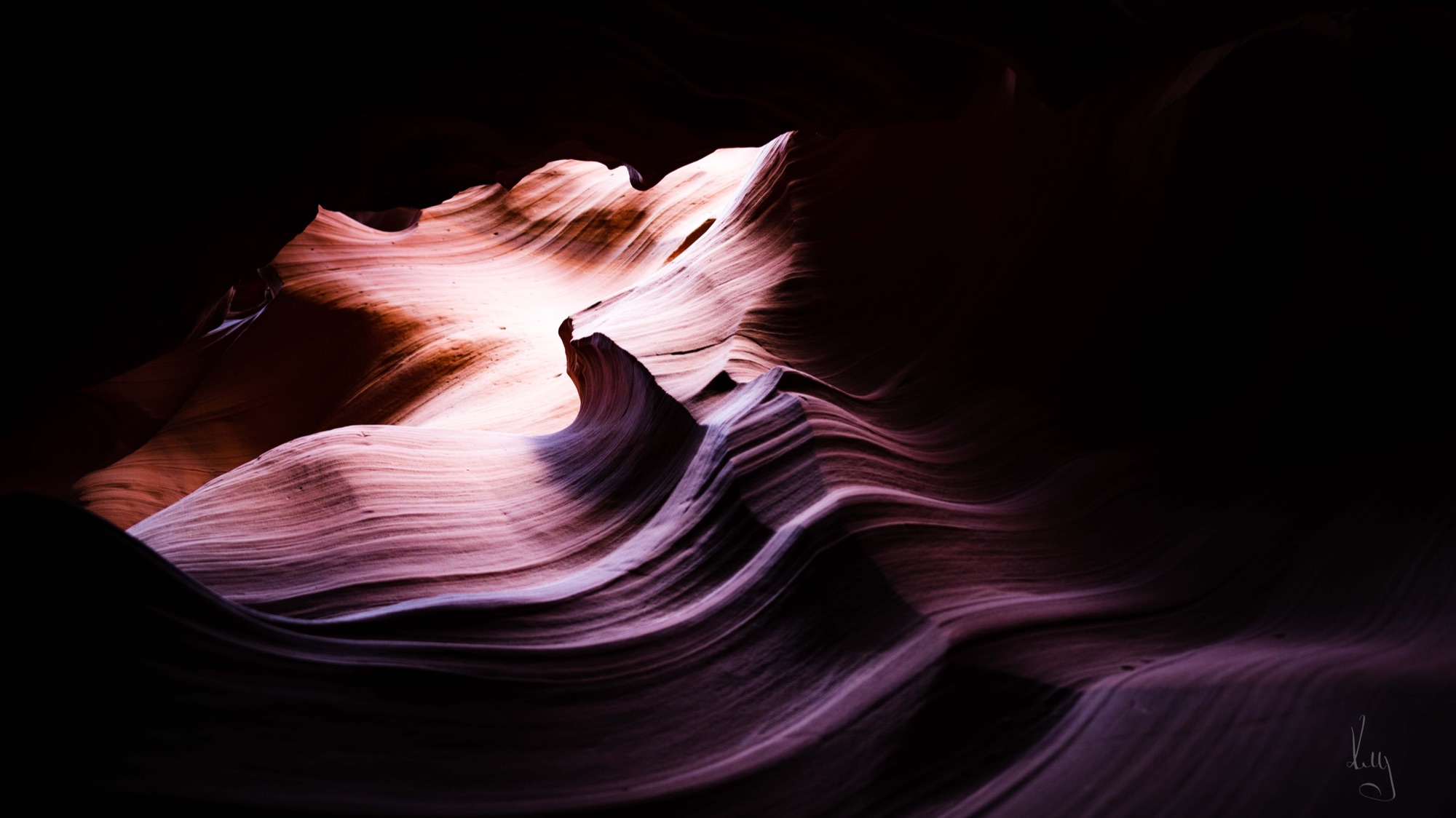
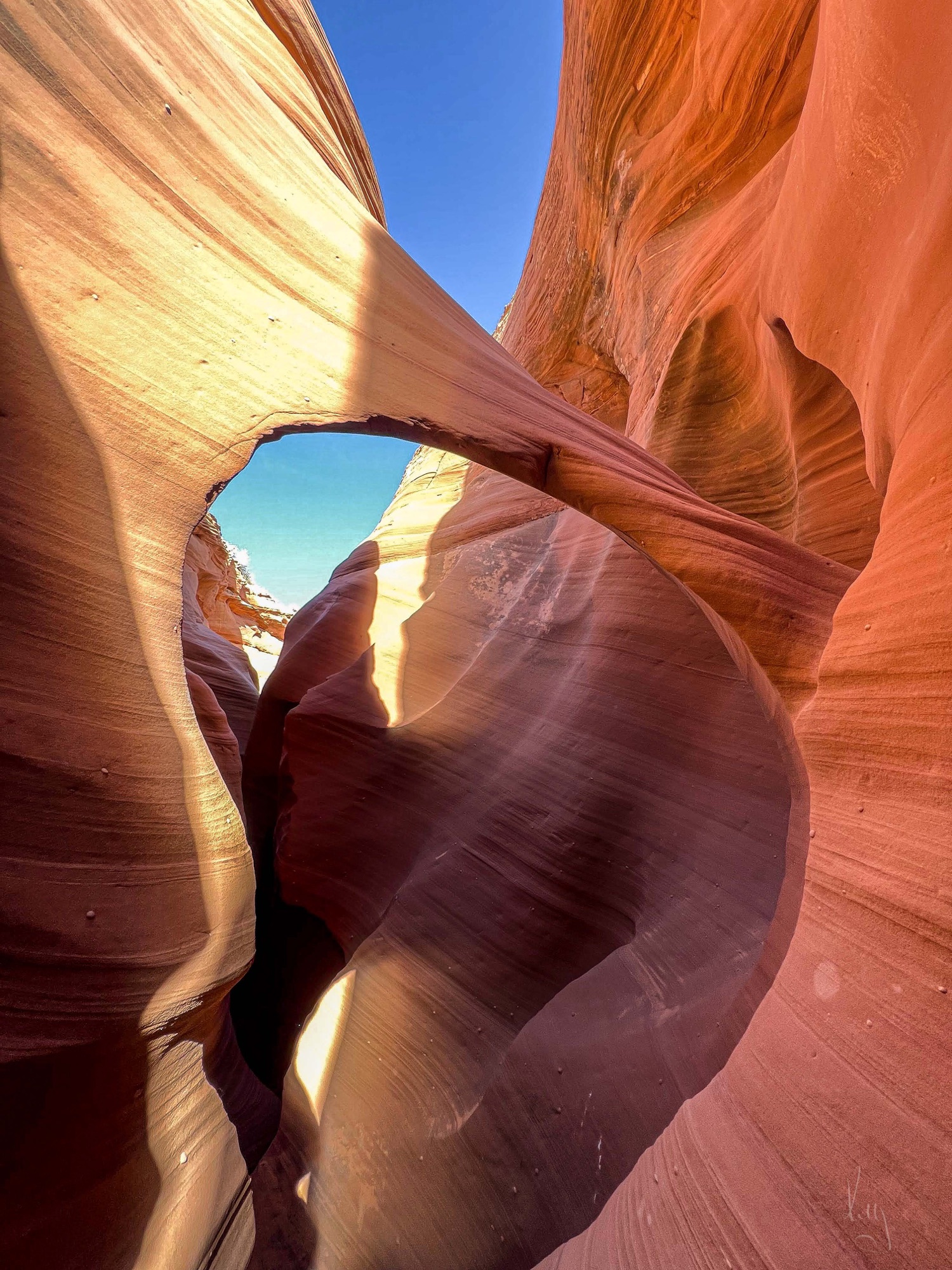
We made this journey to northern Arizona to visit Antelope Canyon, one of the most well-known slot canyons in the US. After a stunning sunrise and proper caffeinating, we arrived for our tour just after 7:30 in the morning. Slot canyons like these are found all over the world. These, being on Navajo land, bring specific requirements.
One of those requirements is that you must have a guide, and your guide must be Navajo. A handful of tour companies will take you to Upper or Lower Antelope Canyon. Very few will also take you to the other canyons nearby, and we wanted to visit Owl and Rattlesnake too. On a friend’s suggestion we picked Adventurous Tours, and they did not disappoint.
The building, right off the highway, is nondescript and a short drive from the canyons. A gentle soul walked up and introduced himself. Blue Sky. He would be our guide, and he told us we would be on a private tour. Wow. So lucky.
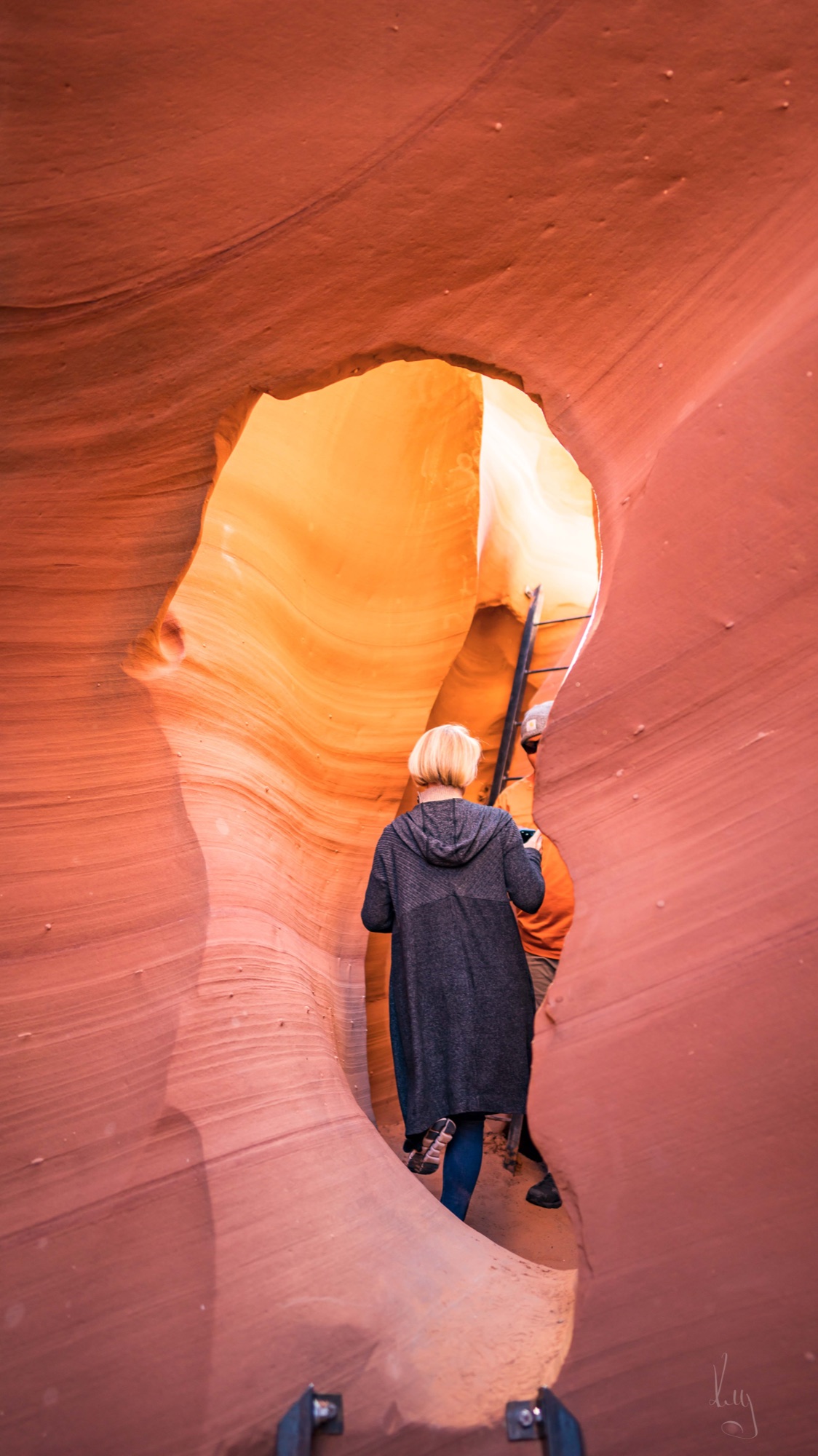
Whatever the universe did to make this a reality, we are grateful for being one on one with Blue Sky. I will never forget this time, and I feel fortunate to have spent it with two incredible humans. They made it a day we will keep.
What are slot canyons?
You may have guessed these narrow canyons are formed by water. The sandstone is worn away over thousands of years, mostly during monsoon season. (Right. Monsoon, in the desert. Didn’t guess that one.) The Antelope Canyon network can be prone to flash flooding, and rain dozens of miles away can surprise visitors. With a deference to not drowning, we welcomed having a guide.
The people and the history
This land has deep meaning for the Navajo, or the Diné, “the people,” as they call themselves. They consider these canyons sacred. Before entering, they stop to frame their minds in the correct, respectful manner. We tried to honor that too. A good reminder for life. Thanks, Blue Sky.
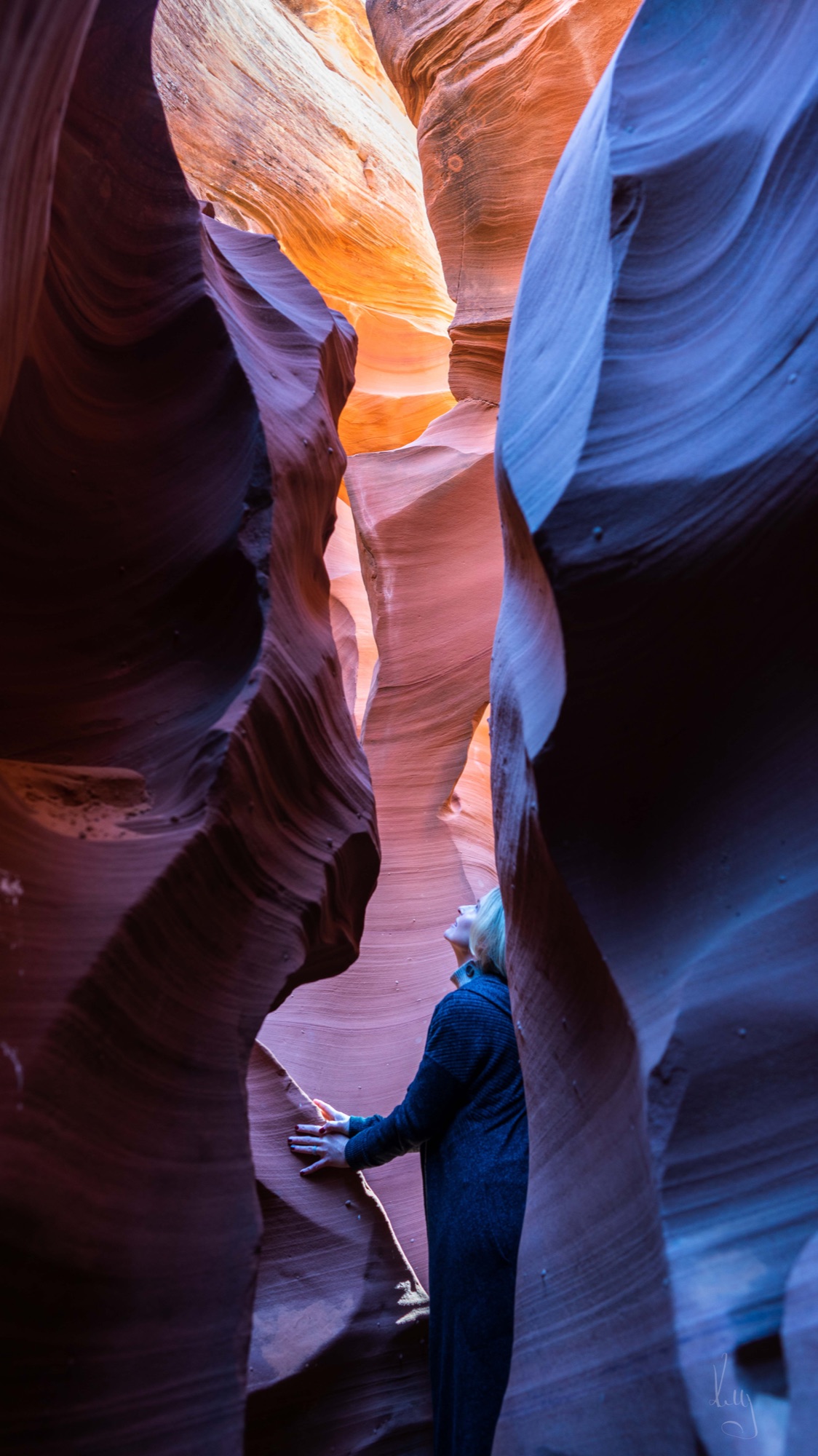
They are not only sacred, they were also protection. Besides the antelope who would seek shade here, hence the name, Blue Sky shared that during the western expansion the Navajo would hide their children in the canyons. He explained it was to keep them from being taken by the church. Hunted, for education and reform. I wonder what else we don’t know.
While the early morning light was not ideal for photographs, I would not trade our one-on-one time with Blue Sky for anything. He was kind, helpful, and genuine. He cared about our experience and made sure we connected with the land. He shared a bit about himself, his dreams, his family. How he saved up to take his wife and son to the Hard Rock in Florida. His eyes lit up telling us, even about his new Hard Rock jacket.
The light
The most expensive photograph ever sold was reportedly by Peter Lik. Ghost sold for an incredible six million dollars, right there in Upper Antelope Canyon. Naturally I was chasing the light, hoping to capture something unique, with no small amount of unhealthy envy for what Lik does. If I am honest, I wish I had tempered the chase and been a bit more present.
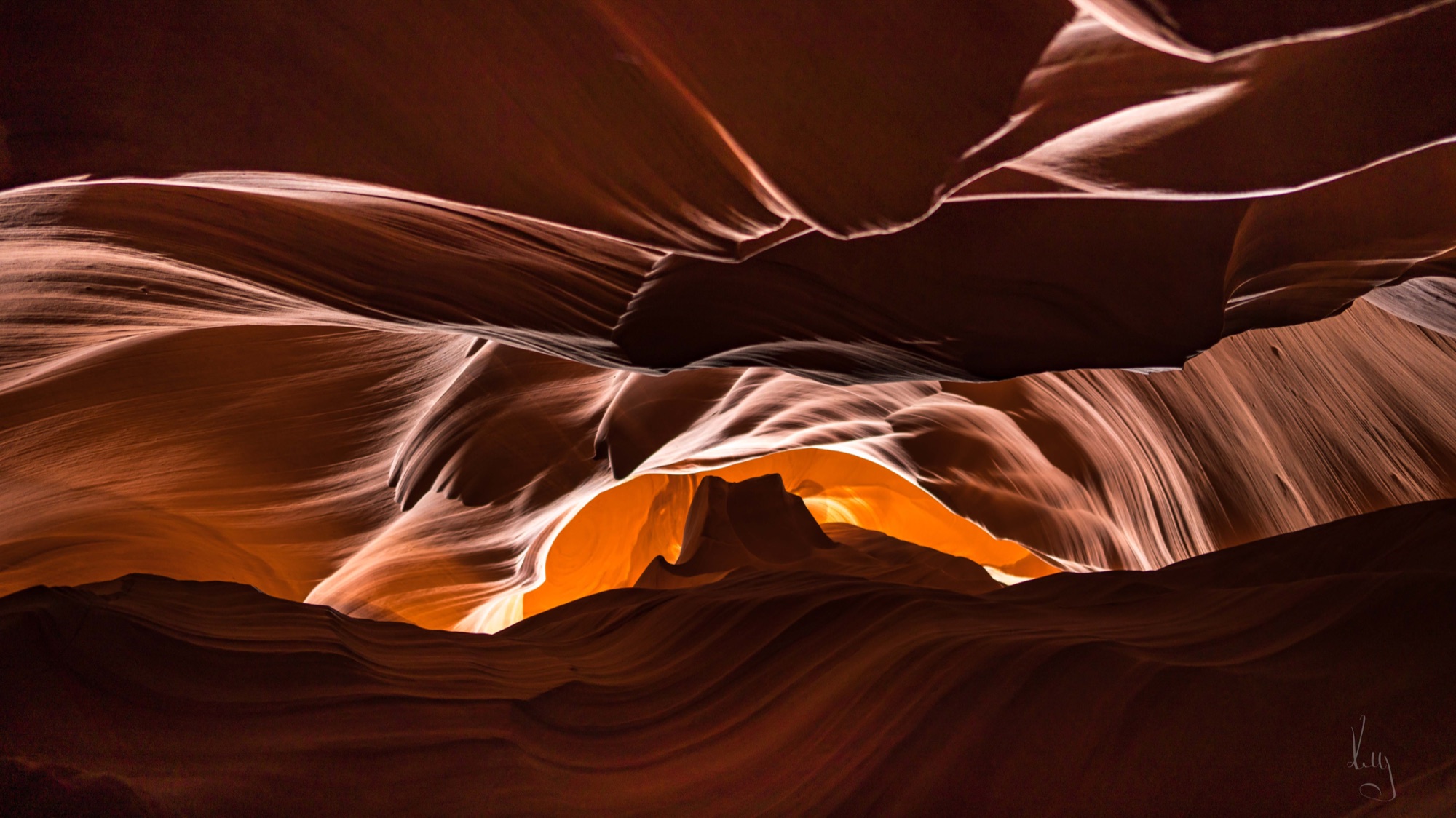
I came for the photos and left with deep appreciation. For the Navajo, the land, and time with my most important human in the world.
kept · the line I keep coming back toA few photography lessons
- No tripods. They used to run photo tours, but stopped during Covid. They may come back.
- No bags either. You can push this. Had we known we’d be with Blue Sky, he’d have allowed a mini tripod, especially in the quieter adjacent canyons.
- Go wide. A no-brainer that I ignored, dragging my 85mm. Next time I took just the 24mm. If I went back, I’d go wider still.
- It’s dark. Turn up the ISO and fix it in post. I did some lying on my back, leaning the camera on the walls for a stable platform.
- The sky is not dark. You’ll fight the bright top against the dark walls. I layered two exposures in post for several frames.
- Blue Sky knew the shots. They have names. Dragon Eye, Eagle, Lady in the Wind. He knew the perspectives and the settings, gave them to us for our phones, and the results were better than my camera. Give him your phone.
Cultivating moments
I came for the photos and left with appreciation. For the Navajo, the land, and time with my most important human in the world. We experienced this place together, and made a memory we will both keep.
Take care, Kelly.